
Timber Retaining Walls Central Coast
Timber Retaining Walls for Central Coast homes — trusted, reliable & free quotes.
- Trusted & Reliable
- Free Quotes
- Central Coast Locals
Get a Free Quote
Timber retaining walls transform sloped Central Coast properties into functional, terraced outdoor spaces with natural aesthetics that complement coastal and cottage-style homes. Using treated pine sleepers or hardwood options like ironbark and jarrah, these retaining solutions create garden beds, level entertaining areas, and usable yard space on properties throughout Terrigal, Avoca Beach, Wamberal, Copacabana, and Erina. The warm, organic appearance of timber blends seamlessly with established gardens while providing structural support for soil retention and erosion control.
With proper H4/H5 treatment and marine-grade coatings designed for Central Coast’s salt air exposure, timber retaining walls deliver 15-25 years of reliable performance at budget-friendly costs compared to concrete or stone alternatives. Professional installation ensures correct post and sleeper systems, drainage solutions with ag pipes and gravel backfill, and compliance with engineering requirements for walls over 1.5 metres.
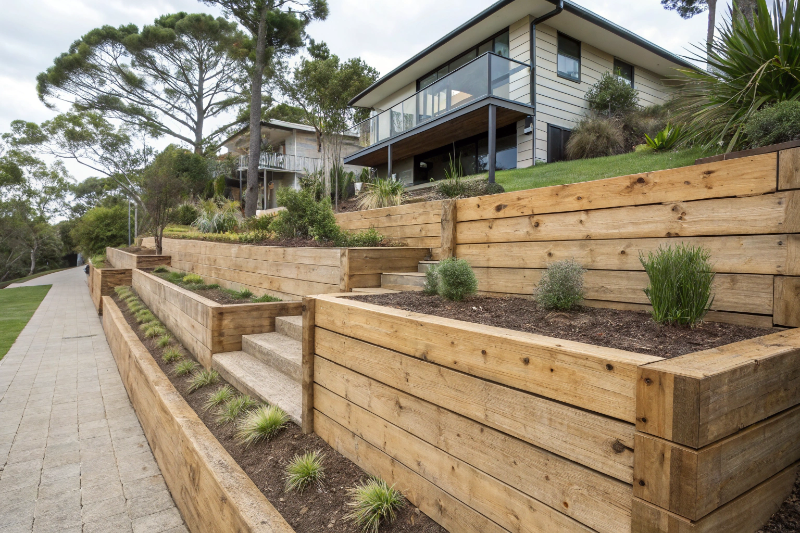
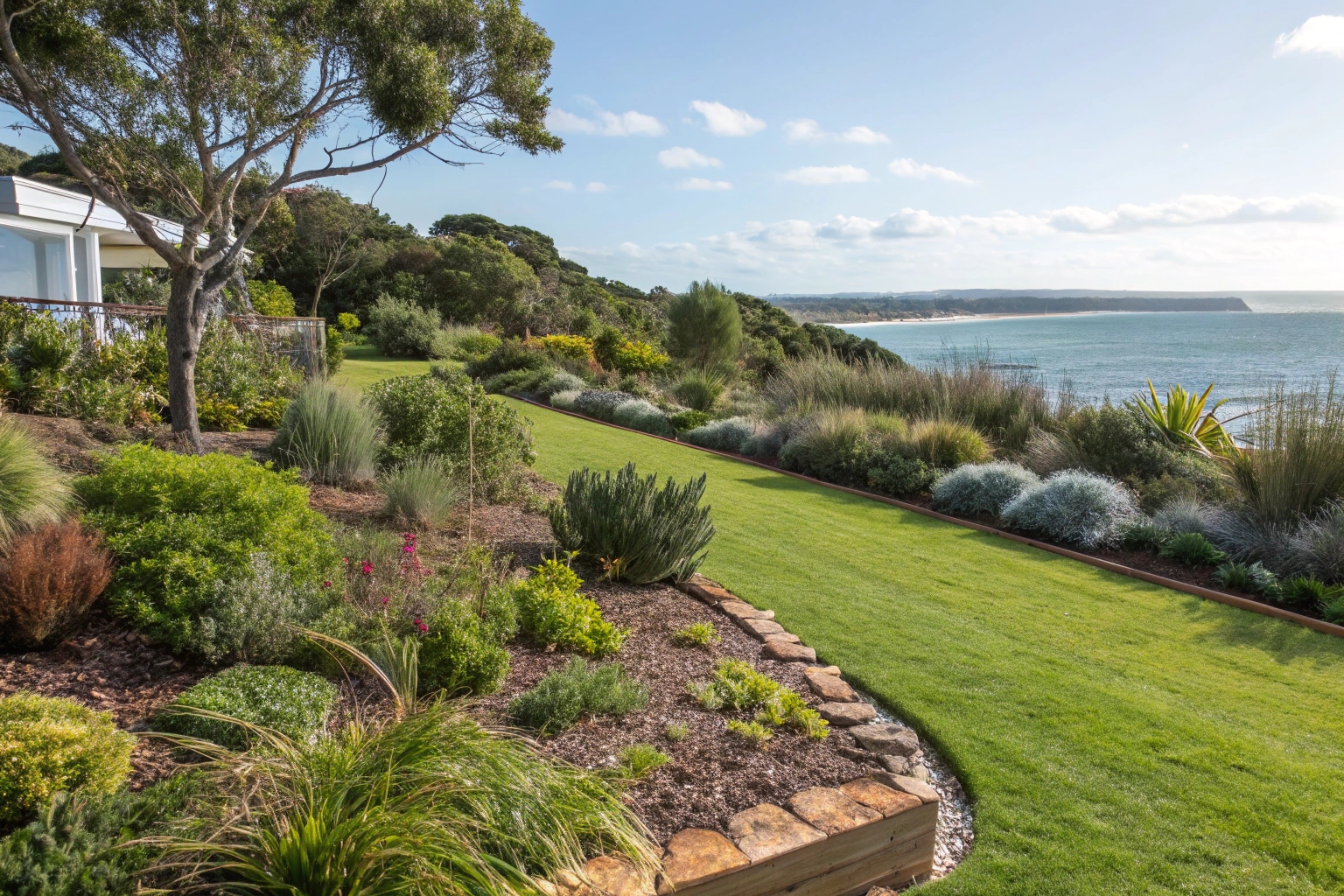
Natural Aesthetics and Design Integration
The warm organic appearance of timber retaining walls complements Central Coast’s coastal vegetation, native gardens, and established landscaping better than concrete or rendered masonry alternatives. Timber’s natural grain patterns, colour variations, and textured surfaces create visual softness that blends with garden beds, lawn edges, and outdoor living areas throughout Erina, Copacabana, and surrounding suburbs. This organic integration makes timber the preferred material for properties with cottage-style homes, beach houses, or gardens featuring Australian natives and coastal plantings.
Timber retaining walls suit terraced vegetable gardens, raised planter beds, and stepped lawn areas where the natural aesthetic enhances rather than dominates the landscape design. The horizontal lines of stacked sleepers create visual rhythm that guides the eye through garden spaces, while vertical installations provide clean modern edges for contemporary outdoor designs. Timber accepts stains, oils, and natural finishes that maintain the wood’s character while enhancing colour depth and weather resistance for Central Coast’s salt air exposure.
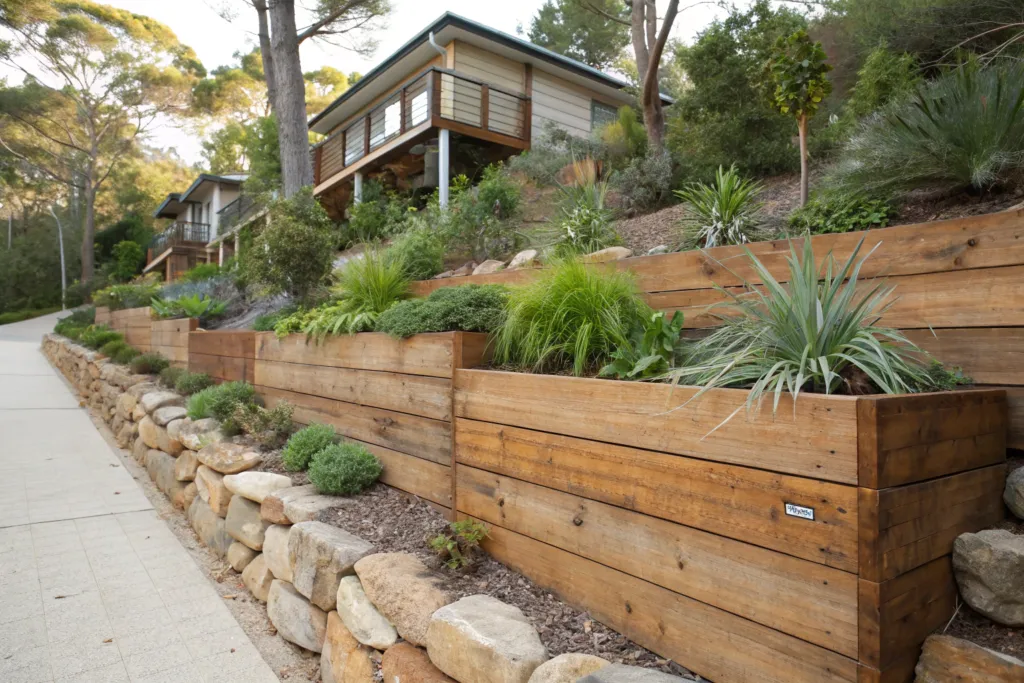
Timber Options for Central Coast Retaining Walls
Treated pine sleepers provide the most cost-effective timber retaining wall option for Central Coast properties, with H4 and H5 hazard level treatments protecting against ground contact, moisture, and termite damage. These pressure-treated sleepers typically measure 200mm x 75mm or 200mm x 50mm, with copper-based preservatives meeting Australian Standards for below-ground installation. The light golden-brown colour weathers to silver-grey over time, creating natural patina that suits coastal garden aesthetics.
Hardwood sleepers using ironbark, jarrah, or spotted gum offer superior durability and natural resistance to decay without chemical treatment requirements. These dense Australian hardwoods provide 25-30 years of service life in Central Coast conditions, though they cost approximately 40-60% more than treated pine options. The rich red-brown tones of jarrah and dark chocolate hues of ironbark create premium visual appeal for properties in Terrigal, Avoca Beach, and Wamberal.
Installation orientation affects both appearance and structural performance—horizontal sleeper stacking creates traditional layered walls, while vertical post installations provide clean contemporary lines with sleepers standing upright between structural posts.
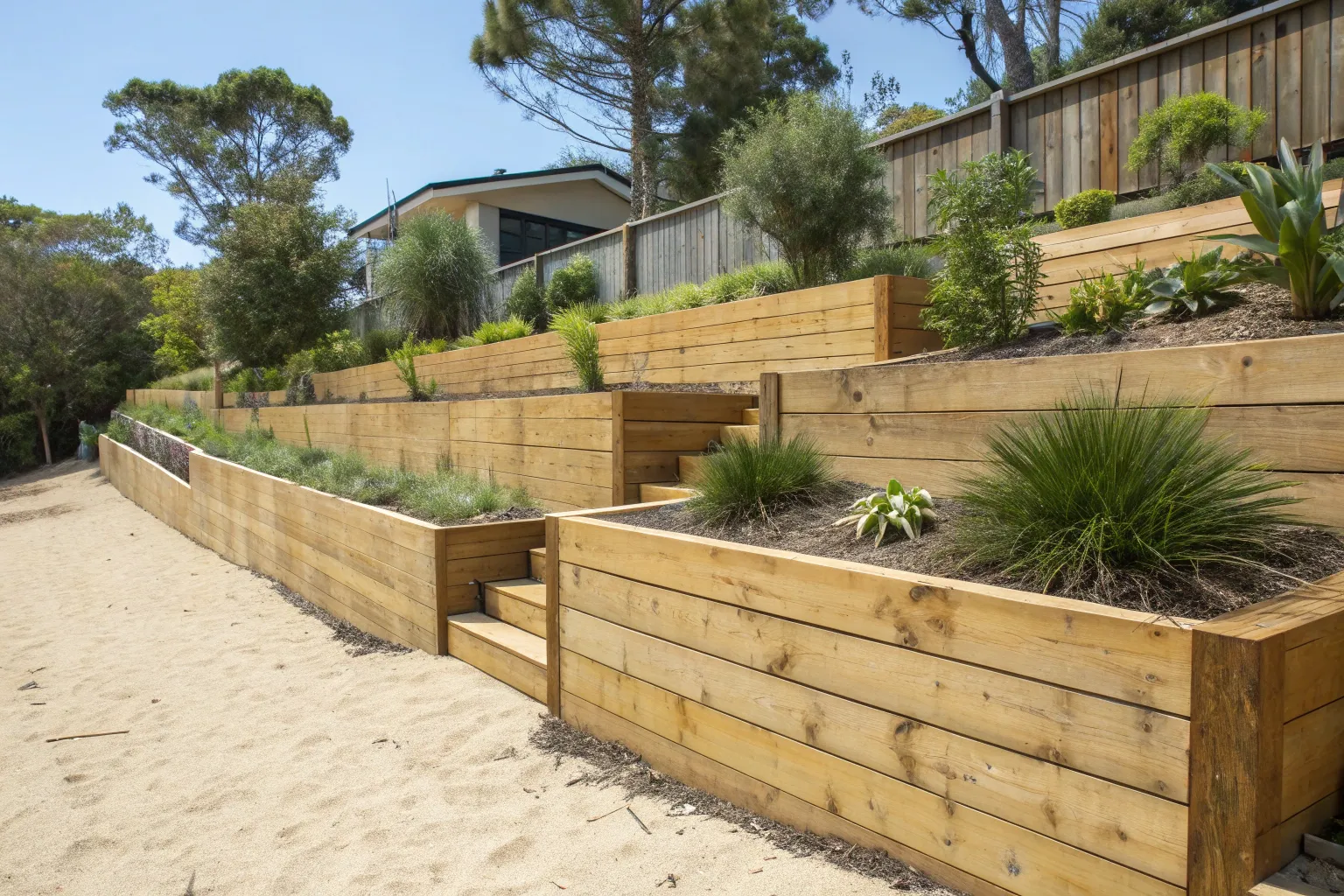
We can do many things for your backyard including Artificial turf installation landscaping lawn replacement retaining walls
Height Specifications and Engineering Requirements
Garden bed retaining walls up to 600mm height typically don’t require engineering certification on Central Coast properties, though local council requirements vary by suburb and site-specific conditions. These lower walls suit terraced planter beds, lawn level changes, and decorative garden edging throughout residential properties in Erina, Copacabana, and surrounding areas.
Walls between 600mm and 1.0 metre require engineering assessment for:
- Soil pressure calculations and drainage requirements
- Structural adequacy for Central Coast’s sandy soils and water table variations
- Compliance with Australian Standard AS 4678 for earth-retaining structures
- Site-specific design based on soil testing and professional inspections
Walls exceeding 1.0 metre height always require engineering certification and council approval before construction begins, with structural plans prepared by qualified civil or structural engineers registered in New South Wales. These taller installations need deeper footings, reinforced post systems, and comprehensive drainage solutions that prevent hydrostatic pressure buildup behind the wall. Engineering fees typically range from $800-$2,500 depending on wall height and complexity.
Lifespan and Performance Expectations
Properly treated and maintained timber retaining walls deliver 15-25 years of structural service on Central Coast properties, with hardwood installations potentially reaching 30 years in well-drained locations away from direct salt spray. This lifespan assumes correct H4/H5 treatment, professional installation with adequate drainage, and regular maintenance including sealing and inspections. Walls without proper drainage or maintenance schedules typically fail within 8-12 years as moisture accelerates decay and structural fixings corrode from coastal conditions.
Treatment quality and maintenance schedules directly impact replacement timing, with annual sealing and proper drainage extending service life toward the upper end of expected ranges. The gradual nature of timber degradation allows planned replacements rather than emergency repairs, giving homeowners time to budget for eventual renewal. Many Central Coast homeowners replace timber walls with similar timber installations when previous failures resulted from poor drainage or inadequate maintenance rather than material limitations.
Drainage Solutions for Timber Walls
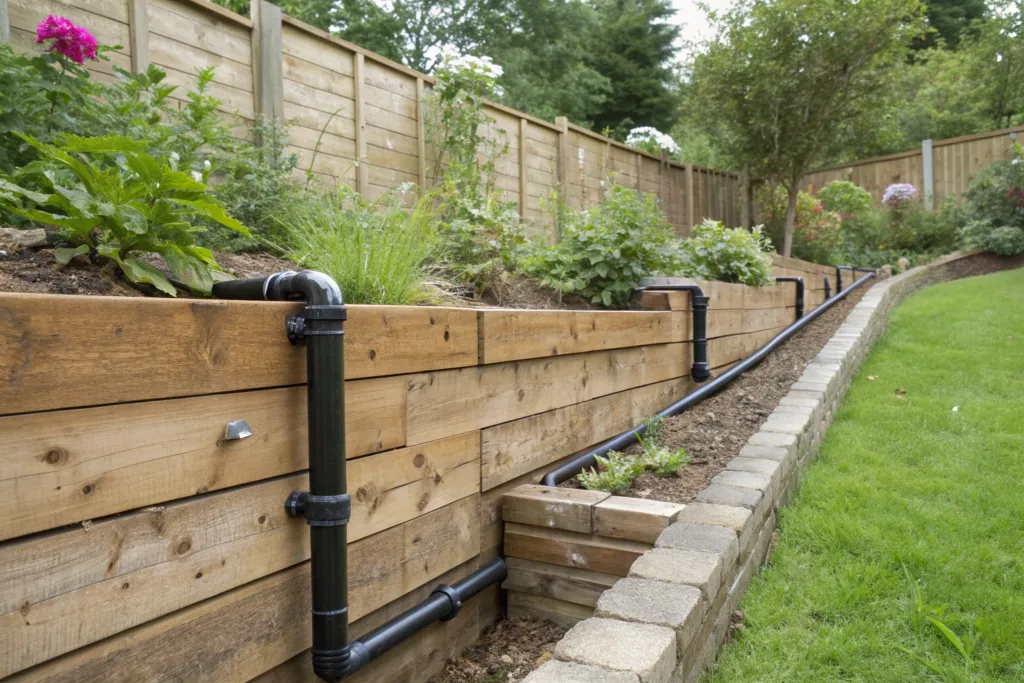
Agricultural drainage pipes installed behind timber retaining walls collect groundwater and direct it away from the structure, preventing hydrostatic pressure that causes wall failure and premature timber decay. These 100mm slotted ag pipes sit on compacted gravel base at wall footing level, wrapped in geotextile fabric to prevent soil particles blocking perforations. The pipe slopes 1:100 minimum gradient toward collection points, removing water before it saturates the retained soil mass.
Gravel backfill creates a free-draining zone between retained soil and timber wall face, allowing water to percolate downward to the ag pipe rather than building pressure against the structure. This 300-450mm layer uses 20-40mm crushed blue metal, separated from retained soil by geotextile fabric. Weepholes at 1.8-2.4 metre intervals provide secondary drainage through the wall face, with 50mm diameter holes drilled through horizontal sleepers just above finished grade level, discharging water during heavy Central Coast rain events.
Professional Installation Methods
Maintenance Requirements for Coastal Environments
Annual inspections identify early signs of timber degradation, checking for surface checking, rot development, loose fixings, and structural movement before minor issues become expensive repairs. Central Coast properties within 5 kilometres of the ocean require more frequent inspections—every 6-8 months—due to accelerated aging from salt air exposure. These inspections should occur after winter storms and summer heat periods when moisture and UV damage are most visible.
Sealing timber retaining walls every 2-3 years maintains moisture resistance and UV protection, using penetrating oils or water-repellent treatments formulated for exterior hardwood or treated pine applications. This maintenance schedule extends to annual applications for walls receiving direct salt spray or full western sun exposure common on Central Coast properties. Treating exposed timber faces for salt air damage involves scrubbing with biodegradable cleaners to remove salt deposits, followed by fresh protective coatings that restore water repellency and UV resistance for properties in Terrigal, Avoca Beach, and Wamberal.
Frequently Asked Questions
How long do timber retaining walls last on the Central Coast?
Timber retaining walls last 15-25 years with proper H4/H5 treatment, professional installation, and regular maintenance including drainage and sealing. Coastal properties within 5 kilometres of the ocean may see reduced lifespans of 12-18 years without marine-grade protective coatings due to salt air exposure. Hardwood options like ironbark or jarrah can reach 25-30 years with correct care.
What timber treatment level is required for retaining walls?
H4 hazard level treatment is the minimum requirement for timber retaining walls, providing protection against ground contact moisture and decay. H5 treatment offers better performance for walls in high-moisture areas or properties with poor drainage. Both treatment levels protect against termites and fungal attack when installed correctly with proper drainage systems.
Do timber retaining walls need council approval on the Central Coast?
Retaining walls over 600mm height typically require engineering assessment and potential council approval depending on specific site conditions and local regulations. Walls exceeding 1.0 metre always need engineering certification and council approval before construction. Properties should check with Central Coast Council for specific requirements based on location and site characteristics.
What causes timber retaining walls to fail prematurely?
Poor drainage is the leading cause of premature timber retaining wall failure, creating hydrostatic pressure and moisture saturation that accelerates decay. Other common failure causes include inadequate footings, corroded fixings from salt exposure, insufficient treatment levels for ground contact, and neglected maintenance allowing moisture penetration. Professional installation with ag pipes and gravel backfill prevents most drainage-related failures.
Can existing timber retaining walls be repaired or must they be replaced?
Individual damaged sleepers can be replaced in timber retaining walls if the overall structure remains sound and drainage systems function correctly. Walls showing widespread rot, structural movement, or multiple failed sections typically require complete replacement rather than repairs. Professional assessment determines whether repair or replacement provides better long-term value based on remaining wall condition.
What drainage is required behind timber retaining walls?
Agricultural drainage pipes at the base of timber retaining walls collect groundwater and prevent hydrostatic pressure buildup. These 100mm ag pipes should be wrapped in geotextile fabric, laid on compacted gravel base, and surrounded by 300-450mm of free-draining aggregate. Weepholes through wall faces provide secondary drainage during heavy rainfall common on the Central Coast.
Are recycled timber sleepers suitable for Central Coast retaining walls?
Recycled railway or bridge sleepers provide proven durability and authentic weathered aesthetics for retaining walls, though availability and sizing can be inconsistent. These salvaged hardwoods often contain higher creosote or preservative levels than modern treated timber, offering excellent decay resistance. Quality varies significantly, requiring careful inspection for structural damage, excessive rot, or weakened sections before installation.
A professionally landscaped garden can significantly increase the value price cost of your property.
- Trusted & Reliable
- Free Quotes
- Central Coast Locals